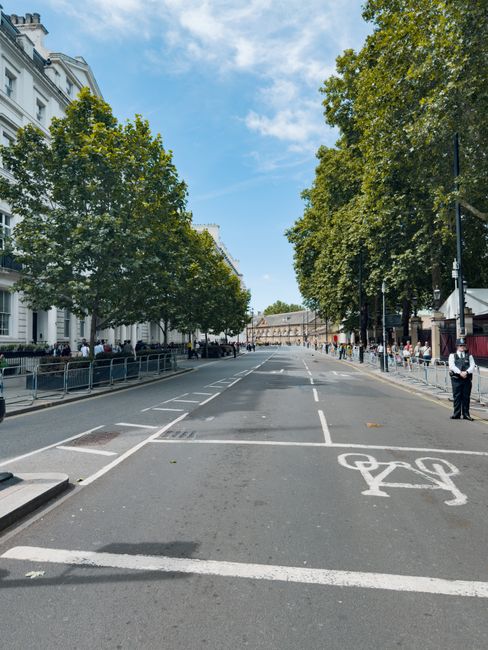
Maida Vale parking permits and loading bay rules for removals
If you are moving in Maida Vale, parking can be the bit that quietly causes the most stress. The sofa is ready, the boxes are stacked, the van is booked - and then you realise the street is tight, the bay is shared, and the clock is already ticking. Maida Vale parking permits and loading bay rules for removals are not glamorous, but they are often the difference between a smooth move and a day full of avoidable problems.
This guide breaks the whole thing down in plain English. You will learn how permits and loading bays usually work for removals, why planning matters so much in this part of London, what mistakes people make, and how to prepare without overcomplicating it. A little preparation goes a long way here. Honestly, it can save you time, money, and a fair bit of muttering under your breath.
Table of Contents
- Why Maida Vale parking permits and loading bay rules for removals matters
- How Maida Vale parking permits and loading bay rules for removals works
- Key benefits and practical advantages
- Who this is for and when it makes sense
- Step-by-step guidance
- Expert tips for better results
- Common mistakes to avoid
- Tools, resources and recommendations
- Law, compliance, standards, and best practice
- Options, methods, and comparison table
- Case study or real-world example
- Practical checklist
- Conclusion
- Frequently Asked Questions
Why Maida Vale parking permits and loading bay rules for removals Matters
Maida Vale has the kind of streets that look beautiful on a spring morning and slightly intimidating when you are trying to park a removal van. There are residential roads, controlled parking zones, loading restrictions, shared bays, and the usual London reality of limited space. If you do not plan for that properly, your move can stall before the first box leaves the hallway.
For removals, parking is not just a convenience issue. It affects access, timing, the safety of your belongings, and whether the crew can work efficiently. A van parked too far away adds carrying distance. A missed loading window can create pressure. A wrong assumption about a bay can invite a ticket. And no one enjoys seeing a penalty notice tucked under a windscreen wiper while they are carrying a mattress downstairs. It happens faster than people expect.
In practice, the biggest issue is that moving day is already busy. You are juggling keys, boxes, phone calls, and maybe a quick cup of tea that goes cold halfway through. If parking arrangements are vague, everything else becomes harder. That is why understanding permits and loading bay rules early is a serious part of the move, not an admin afterthought.
How Maida Vale parking permits and loading bay rules for removals Works
The exact rules depend on the street, the bay markings, the time of day, and local parking controls in force at the address. That is the annoying but honest answer. Some removals can use a loading bay for a short period, while others may need a permit or formal parking suspension if the vehicle will stay for longer or block access in a controlled area.
As a general rule, you need to check three things:
- whether the vehicle can legally stop near the property;
- whether a loading bay is available and usable at the planned time;
- whether the job will take long enough to need formal permission rather than quick loading only.
Loading bays are usually intended for short-term loading and unloading, not for leaving a vehicle parked all day. The practical meaning can vary by location, so the sign on the street matters more than the assumptions people bring from another borough. The road markings, the plate times, and any time limits are what count.
For removals, you also need to think about the van itself. A small man and van setup may fit into tighter access more easily, while a larger vehicle may require more planning. If you are moving a full household, a bigger vehicle or removal truck hire may be more efficient, but it can also be harder to accommodate on a narrow street. To be fair, the right vehicle choice often matters as much as the parking arrangement.
For office relocations or commercial clearances, the planning can be even more detailed. If you are arranging a business move, it may help to review commercial moves and office relocation services so access planning is built into the move rather than patched together on the day.
Key Benefits and Practical Advantages
Getting parking and loading right is not just about avoiding problems. It makes the whole removal feel calmer, cleaner, and more predictable. That is worth something, especially in a busy London street where everyone seems to be trying to squeeze past everyone else.
- Less risk of fines or enforcement action: the obvious one, but still the one people regret most if they ignore it.
- Faster loading and unloading: shorter carrying distance means less wasted energy and less chance of damage.
- Better crew efficiency: the removal team can work in a steady rhythm rather than constantly adapting.
- Reduced stress on moving day: fewer last-minute arguments with the street, the bay, or the clock.
- Safer handling of bulky items: when the van is close, heavy items like wardrobes and appliances are easier to move carefully.
There is also a subtle benefit people overlook: planning parking properly helps everyone at the property. Neighbours are less inconvenienced, building access remains clearer, and the move looks more organised. In shared entrances or mansion blocks, that goodwill matters. Not because everyone becomes your friend, but because the day runs more smoothly when people can still get in and out.
If you are still comparing move types, it can also help to look at services like home moves and house removalists. Different service setups may suit different parking realities. A lighter move with fewer items can be easier to manage around street restrictions, while a larger household move may need tighter scheduling.
Who This Is For and When It Makes Sense
This topic is relevant to almost anyone moving in or out of Maida Vale, but some people need the guidance more urgently than others.
- Flat movers: especially if the property is in a terraced conversion, mansion block, or a street with narrow bays.
- Families moving home: because multiple trips, larger furniture, and time pressure make access planning more important.
- Businesses relocating: office IT, filing cabinets, and workstations need timely access and proper loading space.
- People disposing of large items: if you are arranging furniture pick up or moving bulky items to storage or disposal, stopping space matters even for shorter jobs.
- Anyone using a larger van or truck: bigger vehicles are less forgiving in busy streets.
It also makes sense when the property has awkward access. Maybe the entrance is set back. Maybe there is a one-way road. Maybe there is a loading bay but it is shared by several businesses. Maybe the council controls are stricter than you expected. That sort of thing is common enough that it should be planned for, not discovered halfway through the first lift.
And if you are moving a fridge, sofa, or other large item out of a tight street, parking becomes part of the disposal plan too. That is where pages like fridge and appliance removal and mattress and sofa disposal are useful because bulky-item handling is never just about the item itself. It is about access, timing, and whether the vehicle can stop close enough to do the job safely.
Step-by-Step Guidance
If you want a clean, low-drama move in Maida Vale, follow a practical sequence rather than leaving parking to chance. Here is the simple version.
- Check the property access first. Look at the street, the pavement width, nearby signs, and any obvious loading bays or restrictions. Do not rely on memory from a previous visit. Streets can be deceptively different at 8am compared with 2pm.
- Match the vehicle to the job. A compact van may be better for one-bedroom flats or partial loads. A larger vehicle may be needed for full-house removals, but only if the street can reasonably take it.
- Decide whether loading only is enough. If the van will stop briefly and keep moving, a loading bay may be suitable where permitted. If the job is longer, you may need a permit or other arrangement.
- Build in a buffer. Plan for delays with keys, lift access, traffic, or packing issues. The street may be manageable, but the move itself might not be perfectly smooth. That is normal.
- Confirm the plan in writing. For professional movers, note the address, access constraints, bay restrictions, and estimated loading time. Written notes prevent the classic "I thought someone else had checked it" moment.
- Keep the route clear. Bring items to the door only when the van is ready if possible. Otherwise, boxes start to pile up in the hallway and the whole place feels like a temporary warehouse.
- Have a fallback. If the best bay is taken or the street is busy, be ready with a second option. Sometimes the difference between a smooth move and chaos is simply having Plan B.
If you are using a professional team, services like man with van or moving truck can be matched to access needs, which is often smarter than choosing the biggest vehicle by default. Bigger is not always better. Slightly boring, but true.
Expert Tips for Better Results
A few small habits make a big difference in Maida Vale. These are the things that tend to separate a well-run move from one that feels improvised.
- Take photos of the parking signs. It sounds overly cautious until a question comes up later. Then it is very handy.
- Check the time restrictions twice. Loading bays often look usable at a glance, but the permitted hours can be surprisingly specific.
- Think about the longest item first. A wardrobe, mattress, or sofa can be the thing that dictates access, not the smaller boxes.
- Separate the essentials. Keep keys, permits, paperwork, and payment details easy to reach. Nobody wants to rummage through a bag for ten minutes on the pavement.
- Use packing that speeds up handling. If the boxes are labelled clearly and stacked sensibly, the crew can move faster. That matters when the loading window is tight.
One of the most useful habits is simply starting earlier than you think you need to. In London, daylight, traffic, and parking pressure all change through the day. A 9am plan can feel very different from an 11am plan. Sometimes the street is calm. Sometimes it is a small traffic festival. You never quite know.
Another practical tip: if you are not sure whether a short stop is enough, do not assume it is. Ask for clarity before moving day. That one conversation can save a lot of stress later.
Common Mistakes to Avoid
Most parking problems in removals come from a handful of repeat mistakes. The good news is that nearly all of them are preventable.
- Assuming any loading bay is automatically usable. Some bays are time-limited, some are shared, and some are more restricted than they first appear.
- Leaving parking checks until the morning of the move. By then, your choices are smaller and your stress is bigger.
- Booking a vehicle that is too large for the street. It can force extra walking, more risk, and slower loading.
- Ignoring the time needed to carry items from the property to the van. Short stop, long carry is a bad combination.
- Forgetting about neighbours and shared access. A blocked entrance creates friction that can be avoided with better planning.
- Not accounting for bulky waste or last-minute disposal. If a mattress or appliance suddenly needs to go too, the parking plan may need to change.
There is also a quieter mistake: overestimating how much can fit into a small gap in time. It is tempting to think, "We can probably do it in twenty minutes." Maybe. But maybe not. And if the lift is slow, or the keys are delayed, or someone still has to disconnect the washing machine, twenty minutes turns into forty very quickly.
For awkward clear-outs, it can be useful to review related services such as hazardous waste disposal or what can go in a skip if you are sorting items before the move. Not everything should be bundled into the same pile. That sounds obvious, but in a rushed flat move, obvious things get ignored all the time.
Tools, Resources and Recommendations
You do not need fancy tools to manage removals parking well. You need clarity, timing, and a few practical checks.
- Phone camera: useful for photographing signs, road markings, bay plates, and access points.
- Simple moving checklist: keeps parking, keys, packing, and lifting plans in one place.
- Calendar reminders: especially if the permit or parking arrangement has a time window.
- Floor plan or room list: helps the team prioritise what comes out first.
- Clear communication with the mover: probably the most underrated tool of all.
If you are comparing service levels, it may help to look at pricing and quotes alongside the access constraints. A cheaper job can become expensive if parking access was underestimated. Better to price the reality than the ideal.
For full-service help, you may also want to consider packing and unpacking services. If the packing is more organised, the loading is usually more efficient. And in a constrained area like Maida Vale, efficiency matters quite a bit.
Law, Compliance, Standards, or Best Practice
Parking and loading in London is governed by local traffic controls, street signage, and parking rules that can differ from road to road. That means the most reliable source of truth is always the actual sign at the location and the arrangements made for the move. This article is not a substitute for formal council guidance, but it does reflect the practical approach used on real removals jobs: check the street, confirm the time window, and do not rely on assumptions.
For removals, best practice usually includes:
- confirming where the vehicle can legally stop;
- making sure any loading bay use fits the permitted purpose and time limit;
- avoiding obstruction of driveways, crossings, and access routes;
- planning for safe manual handling of bulky items;
- communicating access restrictions to everyone involved.
Good removal companies also tend to work to internal safety policies and insurance standards. That matters because the street is only one part of the risk picture. If you are comparing providers, it is sensible to look at insurance and safety and health and safety policy information as part of your decision. It is a bit unexciting, but the unexciting parts are often the ones that protect you.
For business moves, compliance also includes information handling, building rules, and making sure access does not interfere with neighbours or shared areas. If sensitive paperwork is part of the move, confidential shredding can be relevant before relocation day. Less clutter, fewer boxes, fewer headaches. Win-win.
Options, Methods, and Comparison Table
There are a few common ways to handle removals parking in Maida Vale. Which one works best depends on the street, the size of the move, and how long the van needs to stay.
| Method | Best for | Advantages | Limitations |
|---|---|---|---|
| Short loading stop | Very small moves, quick pickup, minimal items | Simple, fast, often enough for light jobs | Not suitable if loading takes longer or access is awkward |
| Loading bay use | Moves with clear short-term loading access | Closer van access, easier carrying, more efficient | Must fit local time and use restrictions |
| Parking permit or arranged access | Longer removals, larger households, repeat trips | More certainty and less disruption | Requires more planning and coordination |
| Larger vehicle with careful scheduling | Full-house or business removals | Fewer trips, good for larger loads | Harder to manoeuvre in tight Maida Vale streets |
In many cases, the best answer is not one method alone but a mix. For example, a smaller vehicle may be ideal if the street is tight, while a slightly longer loading window can offset the reduced capacity. That sort of trade-off is normal. Real-world removals are rarely neat, which is fine, because they do not need to be perfect to be well managed.
Case Study or Real-World Example
Imagine a second-floor flat off a Maida Vale side street. The client has a few large items, six boxes, a mirror, and a heavy chest of drawers. The building entrance is fine, but the road is narrow and parking is limited. The first instinct might be to send the largest van available and hope for the best. But that usually creates more problems than it solves.
Instead, the smarter approach is to assess the street, choose a vehicle size that can reasonably stop close by, and keep the loading sequence tight. The team brings out the chest of drawers first, because it is bulky and awkward. Boxes come later. The van waits in a usable position, loading happens steadily, and the move finishes without anyone pacing up and down the pavement checking the clock every two minutes.
That kind of job is common enough. Nothing dramatic. No heroic soundtrack. Just sensible access planning, decent communication, and a realistic time window. Truth be told, that is what most good removals look like when they go well. Calm, almost boring, in the best possible way.
Practical Checklist
Use this checklist before moving day. It is simple, but it catches the usual trouble spots.
- Check the street for loading bays, parking restrictions, and time limits.
- Confirm whether the planned van size fits the access conditions.
- Note if the move needs only a brief stop or a longer loading period.
- Take photos of signs and road markings near the property.
- Tell the removal team about stairs, lifts, narrow entrances, or long carries.
- Separate any items for disposal, recycling, or special handling.
- Keep keys, booking details, and payment information easy to find.
- Build in extra time for delays, especially if the property is busy or shared.
- Check that bulky items are ready to move first if they affect access.
- Have a backup plan if the preferred loading spot is unavailable.
If you need a broader move plan, services such as home moves and book online can help keep the process straightforward from the start. The goal is not just to move stuff. It is to move it with the least amount of unnecessary friction.
Get a free quote today and see how much you can save.
Conclusion
Maida Vale parking permits and loading bay rules for removals are one of those topics that looks minor until it becomes the main event. If you plan the access properly, choose the right vehicle, and respect the street rules, the rest of the move becomes much easier. If you leave it to chance, the day can get messy quickly.
The best approach is simple: check the road, match the vehicle, allow enough time, and make sure everyone involved knows the plan. That is the practical version of moving well in a place like Maida Vale. No drama needed.
And once the last box is in, the van pulls away, and the street quiets down again, you really do feel the benefit of having done it properly. Small thing, maybe. But it makes a big difference.
Frequently Asked Questions
Do I need a parking permit for removals in Maida Vale?
It depends on the street, the parking controls in place, and how long the vehicle needs to stop. Some moves may work with a short loading stop, while others need a formal permit or arranged access. Always check the specific location rather than assuming.
Can a removal van use a loading bay in Maida Vale?
Sometimes, yes, if the bay allows loading and unloading at the time you need it. The important part is the sign and the time restriction. A loading bay is not a free-for-all parking space, and the permitted use can be more limited than people expect.
How long can a removal vehicle stay in a loading bay?
That varies by location and by the rules shown on the bay signage. Some bays allow only short stops. Others may be more flexible during certain hours. It is best to treat the sign as the controlling rule and plan around it carefully.
What happens if the street is too narrow for a large van?
You may need a smaller vehicle, a different parking arrangement, or a more carefully timed loading plan. This is common in older London streets. A bigger van is not always the best option if access is tight.
Should I arrange parking before moving day?
Yes, absolutely. Parking is one of the first things to sort because it affects the whole move. Leaving it until the morning of the move is a recipe for stress, and sometimes for extra charges or delays.
Is a smaller man and van service better for Maida Vale?
Often, yes, if the street is narrow or the move is fairly light. A smaller vehicle can be easier to position near the property. For larger household or office moves, though, a bigger vehicle may still be the better choice if access allows it.
What if the loading bay is occupied when the van arrives?
That is why a backup plan matters. You may need to wait briefly, use another permitted spot, or adjust the loading sequence. A good mover will usually plan for this possibility rather than treating the first option as guaranteed.
Do I need to think about loading rules for furniture pick-ups too?
Yes. Even a single-item pickup can be affected by parking restrictions, especially if the item is bulky. A sofa, wardrobe, or appliance can still need careful access planning, even when the job seems small.
What should I tell the removal company before the move?
Tell them about the street, any loading bays, likely parking restrictions, stair access, lift access, bulky items, and anything that could slow loading down. The more accurate the information, the easier it is to plan the day properly.
Can loading bay rules affect disposal or rubbish removal?
Yes. If you are disposing of furniture, appliances, or mixed items, the vehicle still needs legal access close to the property. That is why disposal jobs can benefit from the same planning as a full move.
What is the biggest mistake people make with Maida Vale parking and removals?
The biggest mistake is underestimating how much access controls matter. People often focus on packing and forget that the van must still park somewhere workable. Once that part is shaky, the whole move becomes harder.
Where should I start if I want a smoother removal in Maida Vale?
Start by checking the property access and deciding what vehicle size makes sense. Then line up the timing, loading plan, and any disposal needs. If you want extra support, reviewing services like pricing and quotes and contact us can help you take the next step with confidence.